When the People’s Bank of China surprised markets in late 2023 with a series of targeted liquidity injections, institutional desks from Frankfurt to São Paulo scrambled to reassess their emerging-market exposures overnight. It was a reminder — uncomfortable for many portfolio managers — that decisions made in Beijing now carry consequence far beyond Asia-Pacific trading hours. China’s financial ecosystem has grown too large, too interconnected, and too technically sophisticated to be treated as a peripheral consideration in global asset allocation. Yet for many Western investors, the frameworks for understanding it remain a decade out of date.
The Scale Shift That Changed the Calculus
China’s bond market is now the world’s second largest by outstanding volume, surpassing Japan and trailing only the United States. Its equity markets, spread across Shanghai, Shenzhen, and Hong Kong, collectively represent tens of trillions in market capitalisation. The inclusion of A-shares in major MSCI indices — a process that began cautiously in 2018 and has continued incrementally — was not merely symbolic. It forced index-tracking funds globally to hold Chinese equities whether their managers understood the underlying dynamics or not.
What makes this particularly complex is the dual nature of China’s capital markets. Onshore markets operate under a distinct regulatory architecture, with circuit breakers, foreign ownership caps in certain sectors, and a currency managed within a controlled floating band. Offshore instruments — through vehicles like the Stock Connect programmes linking Hong Kong with mainland bourses — offer a different entry point, but carry their own liquidity and settlement nuances. Understanding which exposure you actually hold, and through what mechanism, is no longer optional due diligence. It is the baseline.
Information Asymmetry and the Real-Time Challenge
One of the most persistent structural disadvantages for non-Chinese investors is the information gap. Mandarin-language filings, regulatory announcements from bodies like the CSRC, and economic data releases from the National Bureau of Statistics often circulate in their original form hours before quality English-language analysis catches up. In volatile sessions — during trade negotiation announcements, property sector stress events, or unexpected monetary policy moves — that lag can be costly.
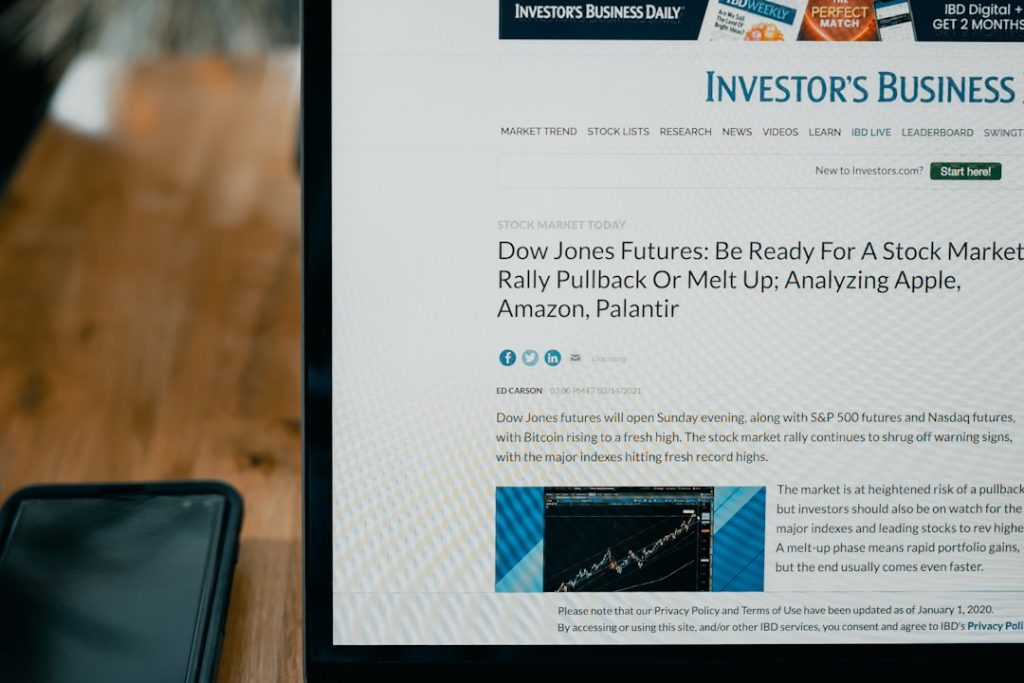
This is precisely why specialist financial news platforms focused on China’s economy and markets have seen a meaningful uptick in readership from institutional and retail investors alike. Platforms providing live trading updates for investors tracking Chinese equities and macro developments serve a genuine function in this environment: bridging the gap between raw market movement and contextual understanding for audiences who cannot monitor Mandarin-language feeds directly.
The demand is structural, not cyclical. As China’s weight in global benchmarks grows and as its companies expand across Belt and Road economies, the need for timely, reliable China-specific financial intelligence will only deepen. It is not sufficient to check a generalised emerging-market feed and assume China is adequately covered within it.
Sector Concentration and the Risks Hiding in Plain Sight
Western investors who entered Chinese markets through thematic ETFs in the 2018–2021 period often found themselves heavily concentrated in consumer technology — Alibaba, Tencent, Meituan, JD.com. The regulatory crackdown that began in late 2020, targeting internet platforms on antitrust and data-security grounds, erased hundreds of billions in market value within roughly eighteen months. Many retail investors had no framework to anticipate this, because they were applying a Silicon Valley regulatory lens to a fundamentally different policy environment.
The lesson was not that Chinese equities are uninvestable — institutional money has continued to flow in, often at discounted valuations. The lesson was that sector-specific policy risk in China operates differently and moves faster than in most OECD markets. Regulatory intention is frequently telegraphed through state media commentary and government work reports well before formal rules are codified. Investors who track these signals — who read the National People’s Congress economic targets or monitor People’s Daily editorials on industrial policy — often have meaningful advance notice of the direction of travel.
The Manufacturing and Green Energy Dimension
Attention is increasingly shifting toward the sectors Beijing is actively promoting rather than constraining. China’s dominance in solar panel manufacturing, battery technology, and electric vehicle supply chains is not accidental — it reflects a decade of deliberate industrial policy, subsidised research, and protected domestic scaling. The export implications of this are already reshaping trade balances across Europe and Southeast Asia, and the investment implications are still being digested. Companies sitting in the middle of these supply chains — whether Chinese manufacturers or their international materials suppliers — represent a very different risk profile than the consumer tech names that defined the previous investment cycle.
Rethinking Exposure Without Overreacting
Blanket avoidance of Chinese market exposure carries its own risks, particularly for long-horizon institutional investors who cannot afford to underweight a market of this size indefinitely. The more productive question is not whether to have exposure, but how to structure it — across which instruments, in which sectors, and with what informational infrastructure in place to monitor it credibly. That infrastructure question, often treated as an afterthought, is in many ways the most consequential one. The investors caught flat-footed by China’s regulatory shifts were not, as a rule, lacking in capital or sophistication. They were lacking in context — and in the real-time intelligence to act on it when it mattered most.